
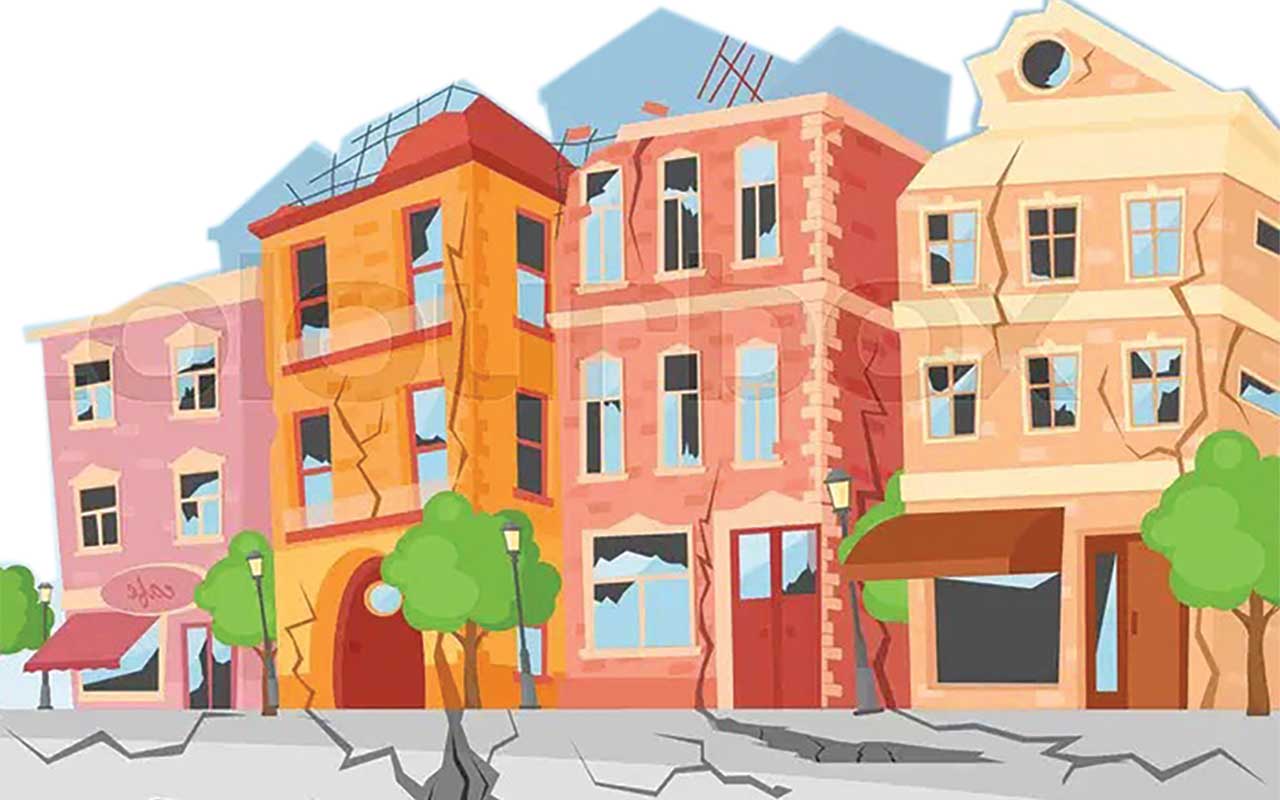
As Nigerian cities yoke under the weight of rapid urbanisation, the cost of unplanned growth may soon outstrip the benefits. From Lagos to Kano, Port Harcourt to Abuja, the consequences of urban expansion are manifesting in congested roads, housing deficits, environmental disasters, and deepening inequalities, CHINEDUM UWAEGBULAM reports.
As Nigeria’s urban population surpasses 50 per cent, concerns are mounting over the high costs of rapid urbanisation, driven by weak physical planning and chronic underinvestment in infrastructure.
The country currently records one of the fastest urbanisation rates globally, growing at over 4.5 per cent yearly, but the country’s major cities are struggling to cope. From housing shortages to gridlocked roads and recurring floods, the consequences of poorly managed urban expansion are becoming more visible.Cities like Lagos, Abuja and Port Harcourt are expanding beyond planning control, and the development is largely unregulated, while buildings are springing up in unsafe and unapproved locations. Many city master plans exist only on paper.
In Lagos, the 2012–2025 Development Plan has been undermined by uncontrolled settlement growth and political interference. Similar scenarios play out in other states, where informal housing now accounts for over 60 per cent of urban dwellings in places like Abuja and Benin City.
The Guardian gathered that rapid urban growth strains existing infrastructure (roads, water, power, public transport), and leads to higher maintenance and expansion costs. The demand for housing in cities often outpaces supply, increasing rent and property prices even as poor job creation in the formal sector pushes many into informal employment with low income and job insecurity.
As all this happens, urban areas are becoming highly unequal, with stark contrasts between affluent neighbourhoods and informal settlements.
Also, high population densities lead to congestion, reduced quality of life, and pressure on public services like schools and hospitals. On the other hand, urban poverty, unemployment, and inequality fuel crime, particularly in slums. Poor urban planning forces low-income residents out of city centres when land becomes commercially valuable, and urban living increases psychological stress due to noise, pollution, insecurity, and isolation.
The World Bank estimates that Nigeria needs about $100 billion yearly for the next 30 years to bridge its infrastructure deficit, much of it in urban areas. However, most state and local councils lack the revenue or borrowing capacity to meet this demand.
While Lagos generates over ₦400 billion yearly in Internally Generated Revenue (IGR), most states fall far behind. Property taxation remains weak, with outdated assessments and poor enforcement of land use charges.
With this scenario in sight, urban settlement experts maintain that the financial gap is forcing cities to rely on debt or federal allocations, which are increasingly unsustainable.
They further explain that poor physical planning is also increasing cities’ exposure to environmental disasters. Lagos State, for instance, reportedly loses over N240 billion yearly to flooding, with drainage systems clogged by refuse and illegal structures.
In Bayelsa, Benue and Kogi states, yearly riverine flooding displaces thousands. Yet, many new developments continue to ignore environmental impact assessments or zoning regulations.
Consequently, town planners are demanding a review of the 1978 Land Use Act, which vests land control in state governors. The law, originally intended to simplify land administration, has become a barrier to affordable housing and sustainable urban planning. As vast tracts of urban land lie idle due to speculation, while land access for housing or public services remains restricted. In response, informal settlements have grown, often lacking basic services and legal security.
The experts disclosed that urbanisation has fuelled infrastructural costs such as traffic congestion, water and sanitation stress, as well as energy demand. For instance, poorly planned road networks and a lack of functional public transport systems result in lost productivity and increased emissions, just as many cities struggle to provide clean water and adequate sanitation, especially in informal settlements.
The past president of the Nigerian Institute of Town Planners (NITP), Mr Toyin Ayinde, told The Guardian that the biggest challenge facing urban planning in Nigerian cities today is population growth that is not matched by the development of infrastructure needed for functional urban environments.
“Cities are like living organisms that experience various dynamics of growth or expansion, decline and/or deterioration leading to blighted communities, and can also become rejuvenated through renewal and regeneration activities.”
He explained that the functionality of a city is dependent on decisions taken by its administrators, as advised through the various physical development plans. “And when such plans are not available, it is also a decision to live haphazardly, without any form or order. Master plans and other development plans are as effective as those implementing them.
“While the knowledge to plan resides in the urban planner, the power and resources to plan don’t rest with them. Planners depend on political administrators to fund the preparation of plans. When they ‘graciously’ do, and the plans are prepared, the power to implement still lies with the political administrators.
The effectiveness of master plans is dependent on the political will to implement the blueprints. When administrators choose to ignore existing plans, the path of chaos is what they have chosen.